The wooden villas of Truskavets — an open-air museum of spa architecture
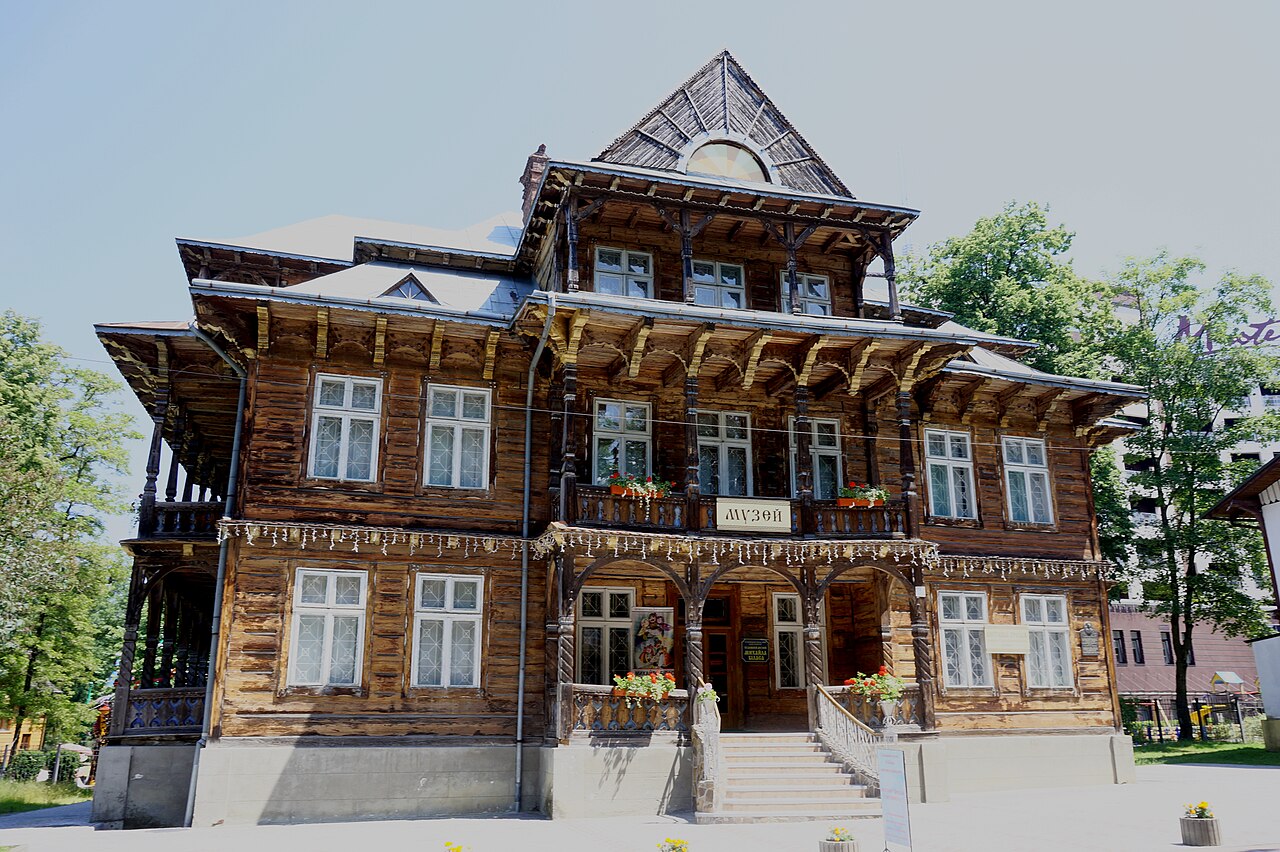
If Naftusia is the soul of Truskavets, the wooden villas are its face. Scattered between the concrete sanatoriums stand dozens of survivors from the resort's first golden century — and finding them is one of the best free pleasures in town.
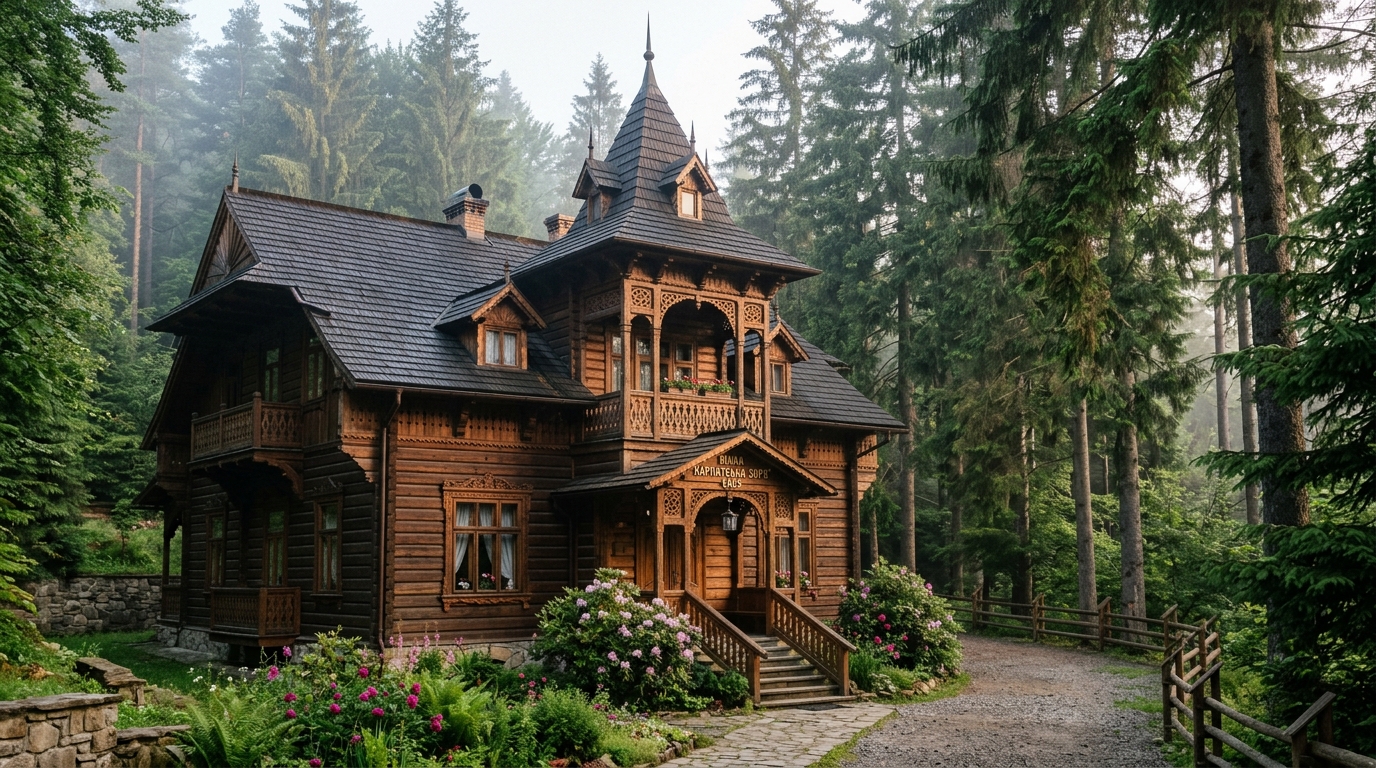
The style
Turn-of-the-century Truskavets built in the manner architecture historians call the Swiss spa style with Hutsul and Carpathian accents: timber construction, steep shingled roofs against Carpathian snow, two-storey verandas trimmed with lace-like carving, little towers, and decorative weathervanes. Colours were cheerful — warm ochres, forest greens, bright whites, and natural wood stains — because a spa was meant to lift the spirit before it healed the kidneys.
Every villa had a romantic name rather than a dull number: Goplana (named after the water nymph of Polish romantic lore), Sariusz, Zosia, Under the White Eagle, Świtezianka. The name was the brand: guests booked rooms "at Goplana's" or "at Świtezianka's" year after year, establishing a personal connection with the place, much like returning to a beloved grandmother’s home.
What survived & 2026 Heritage Preservation
While wars, nationalisation, and Soviet-era concrete planning took their toll, a remarkable number of wooden villas have survived and are seeing a magnificent renaissance today. In 2026, the town has embraced digital tourism: almost all surviving heritage villas are outfitted with high-tech interactive brass plaque QR codes. Scanning them brings up historical archival photos, stories of the original owners, and audio guides in five languages.
The best single example is Villa Sariusz on Shevchenka Street, home today to the Truskavets History Museum. Visiting this architectural masterpiece is worthwhile for the intricate woodcraft alone, even before exploring the fascinating local historical collections inside.
The streets surrounding Kurortny Park — Shevchenka, Ivana Franka, and Sichovykh Striltsiv — hold the densest concentration of these historical treasures:
- Villa Goplana (1898): A legendary three-story masterpiece that is now home to the Mykhailo Bilas Art Museum, displaying the world-renowned textile artworks of the local Ukrainian maestro inside magnificent wooden chambers.
- Villa Świtezianka (1898): Fully restored to its historic grandeur, displaying stunning Carpathian woodwork and operating as an active premium health pension.
- Villa Sofia (1895): A beautifully preserved example of Swiss chalet-style architecture with multi-tiered lace balconies.
Some villas still do their original job as small boutique guesthouses, and staying in one is the most atmospheric way to experience Truskavets (see our villa listings). Others house clinics, local administrative offices, or are undergoing careful structural preservation.
A self-guided walk
Start at the Truskavets History Museum (Villa Sariusz), walk down Shevchenka Street toward the central pump room counting the carved verandas, loop through the lower spa park past the historic wooden bandstand, then climb into the quieter lanes of the Adamivka quarter where the quiet alleys hide the least-restored, most photogenic, and atmospheric wooden chalets. The entire walking circuit takes about ninety minutes at a relaxed spa pace — that is, with a warm cup of Naftusia at both ends.
Why it matters
Many historic spa towns across Europe lost their wooden heritage to fires, war, and modern redevelopment. Truskavets kept an unusually large share of its late-Victorian and interwar architecture. Walking these leafy streets today, you see exactly what a middle-class European holiday looked like in 1912 — and understand why guests crossed empires to spend three weeks in this Carpathian sanctuary.